01
Pick the outing.
Dinner, a game, a trip day, coffee and work. The template fills in what it can and lines up the questions you'll want later, like coffee near me or back to the hotel.
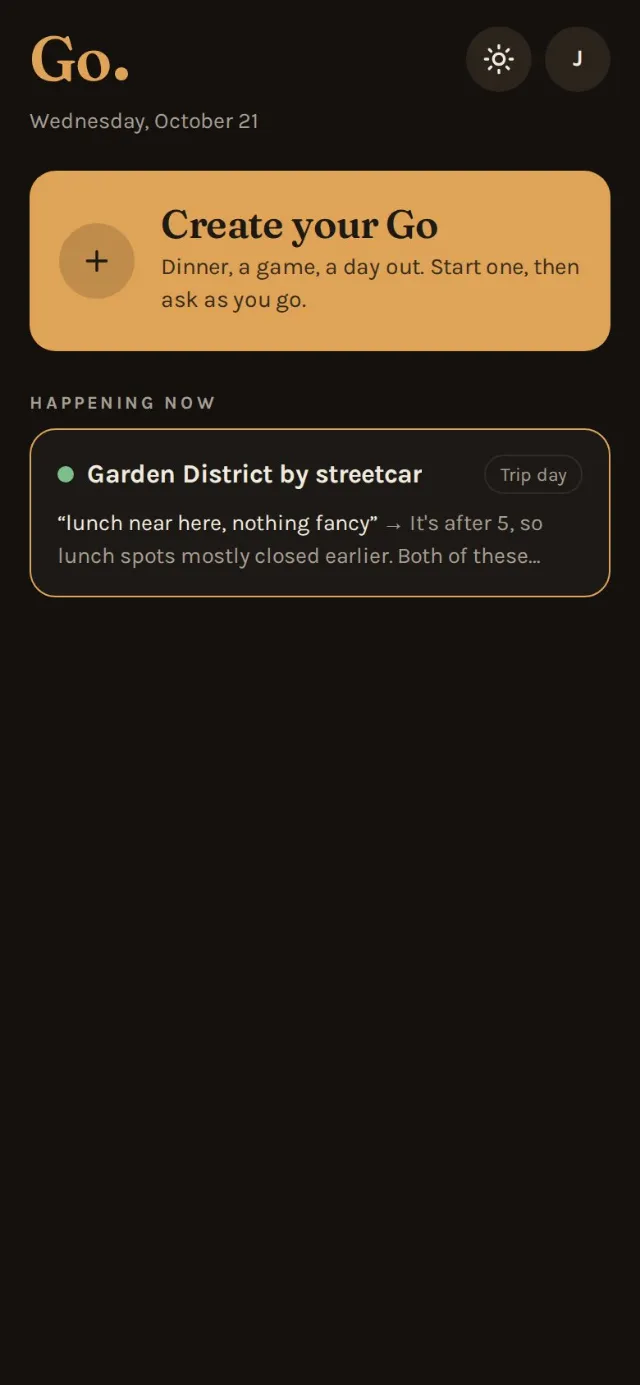
One outing, one aide. Dinner, a game, a day in a city: start a Go, then ask from your phone as you walk. It already knows where you are, what the plan is and what you like.
It needs context so I should be able to create a go and it's a session that is my aide/guide while I'm out and about.Jamie Ippolito, the day he asked for Go, October 21, 2026
A Go is one outing with its own aide. Making one takes less time than reading this paragraph.
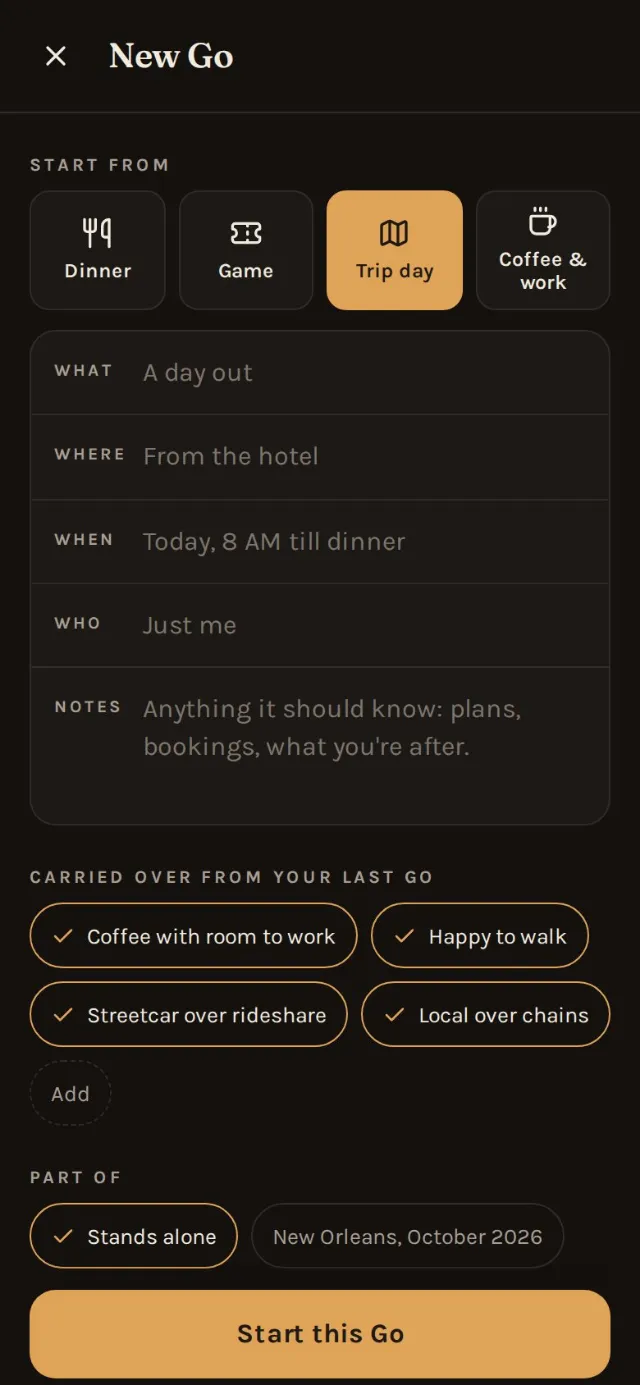
Dinner, a game, a trip day, coffee and work. The template fills in what it can and lines up the questions you'll want later, like coffee near me or back to the hotel.
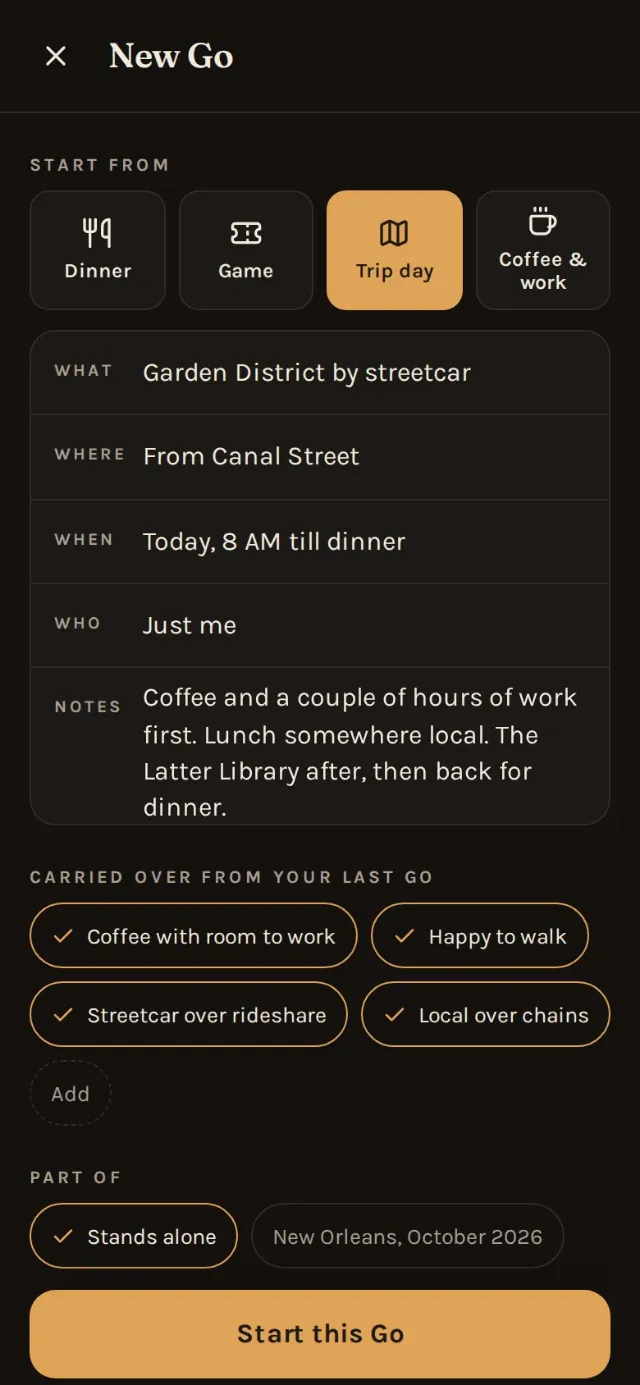
What, where, when, who, notes. Only the first one is required. Write it the way you'd text it: Lunch somewhere local. The library after.
Coffee with room to work. No bars or wine. Happy to walk. They carry from Go to Go as chips, so you never say them twice.
A Go can also be part of something bigger: a side quest of the trip, starting with everything the trip already knows.
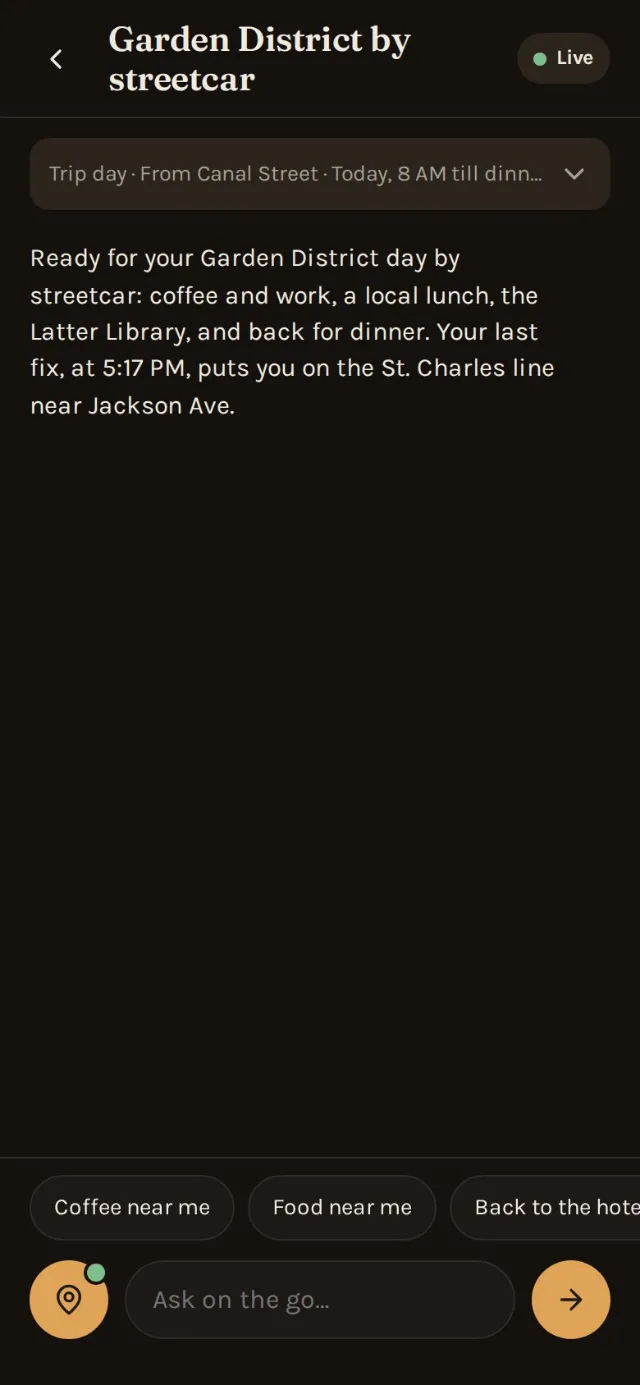
Before it says a word, the Go reads the plan, and the trip if it belongs to one. So its first line is about your day, not a hello.
Ready for your Garden District day by streetcar: coffee and work, a local lunch, the Latter Library, and back for dinner.
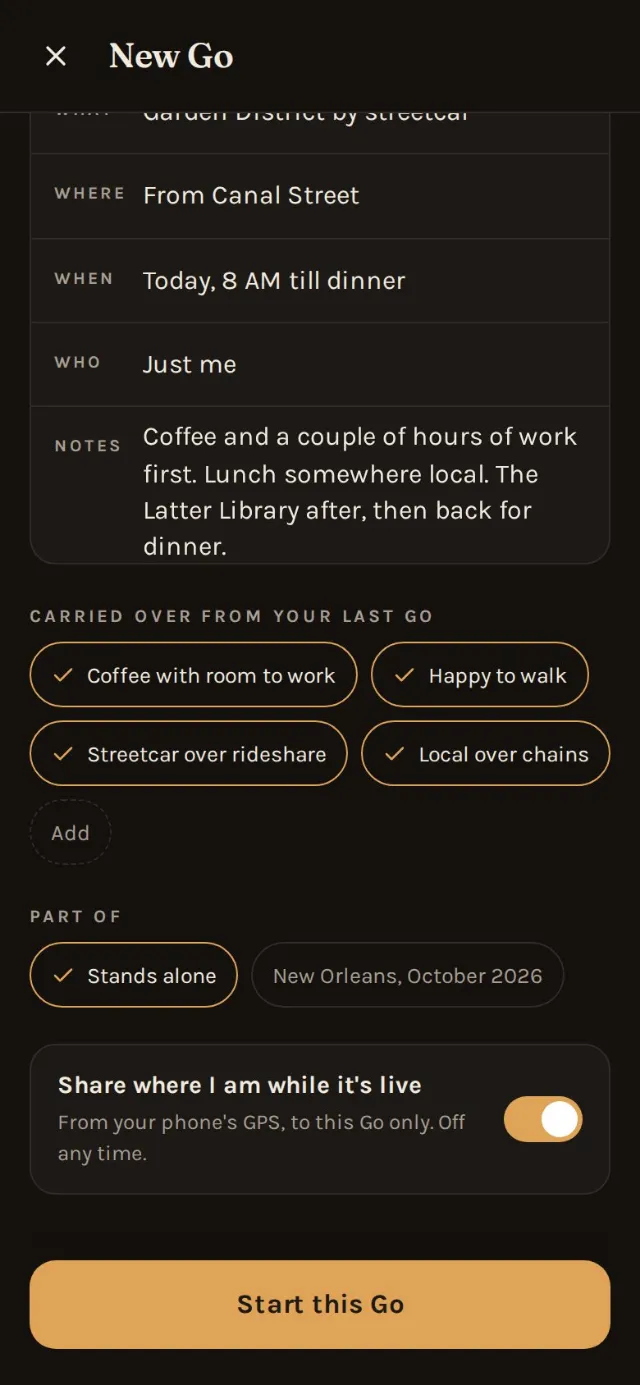
While a Go is live, it gets your phone's GPS. Every question carries where you are, and a card's walk time counts down as you go. Location goes to that Go and nowhere else, and one tap turns it off.
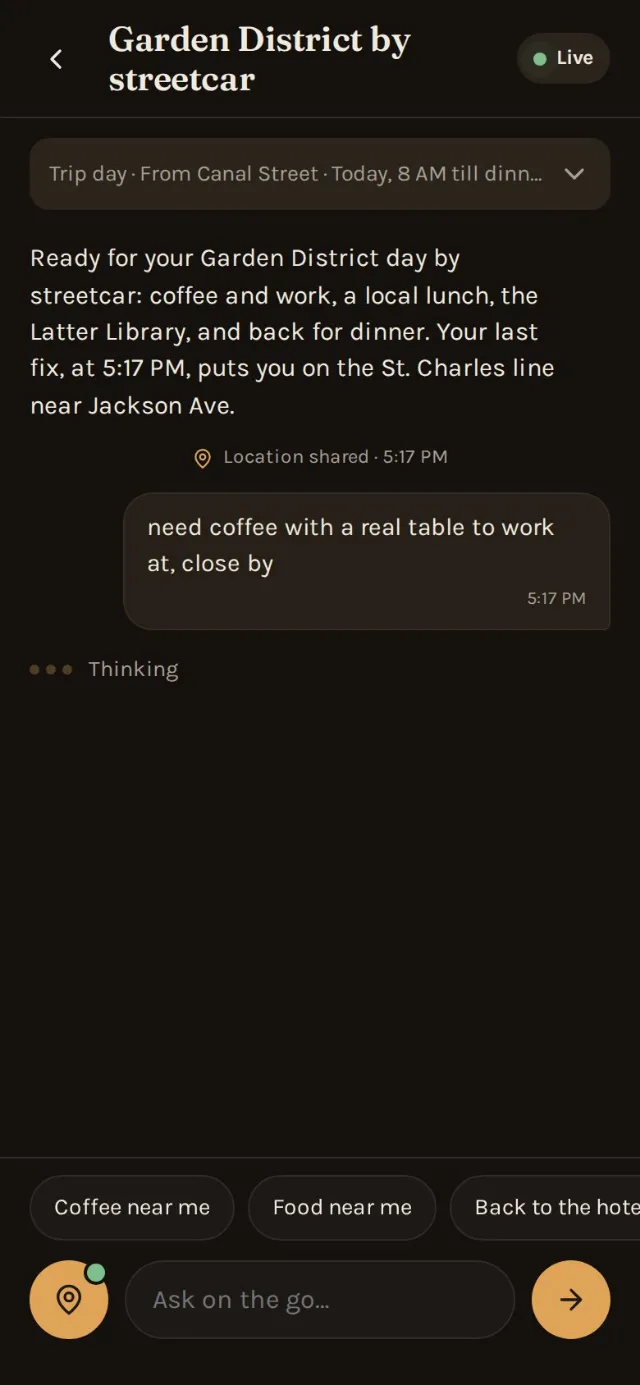
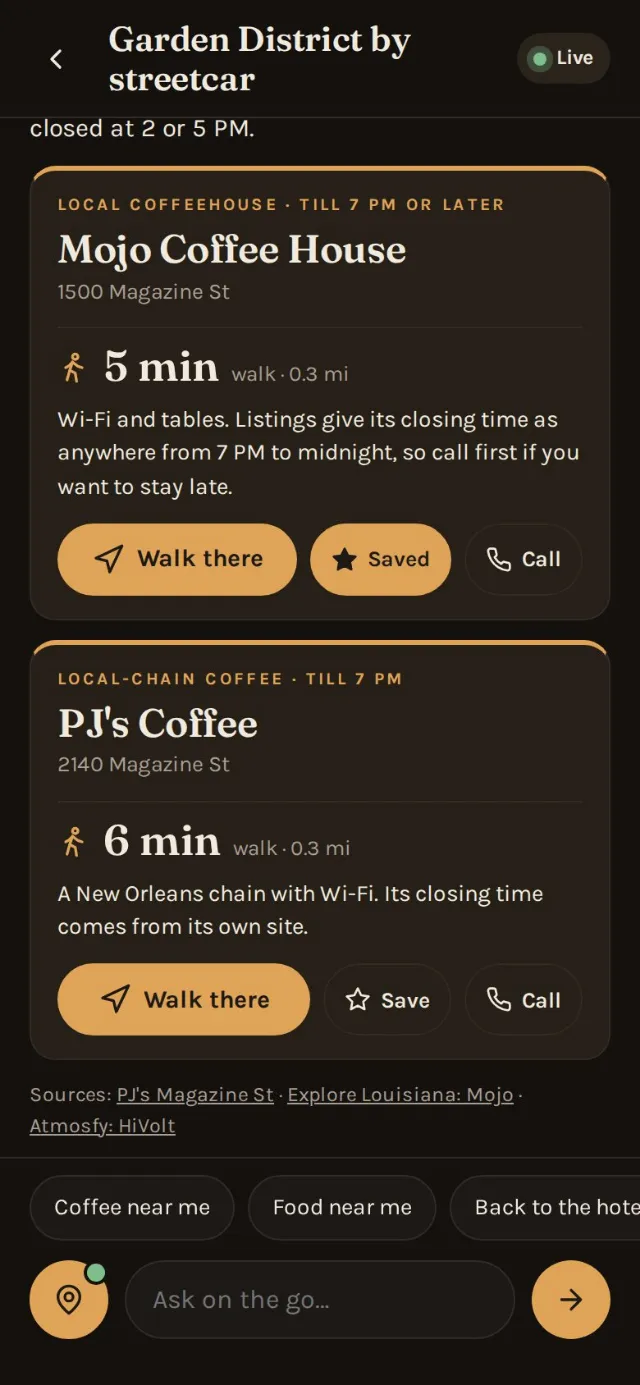
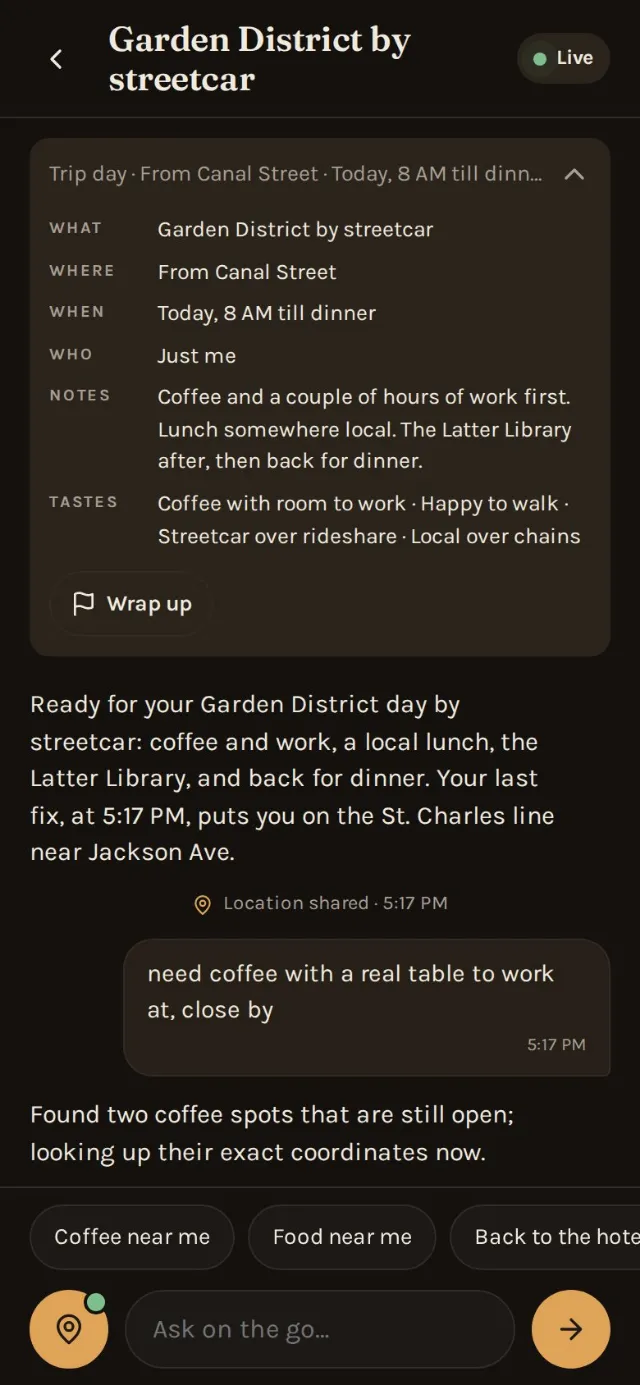
need coffee with a real table to work at, close by
No address, no filters. It knows where you're standing, that you came to work, and that you'd rather walk.
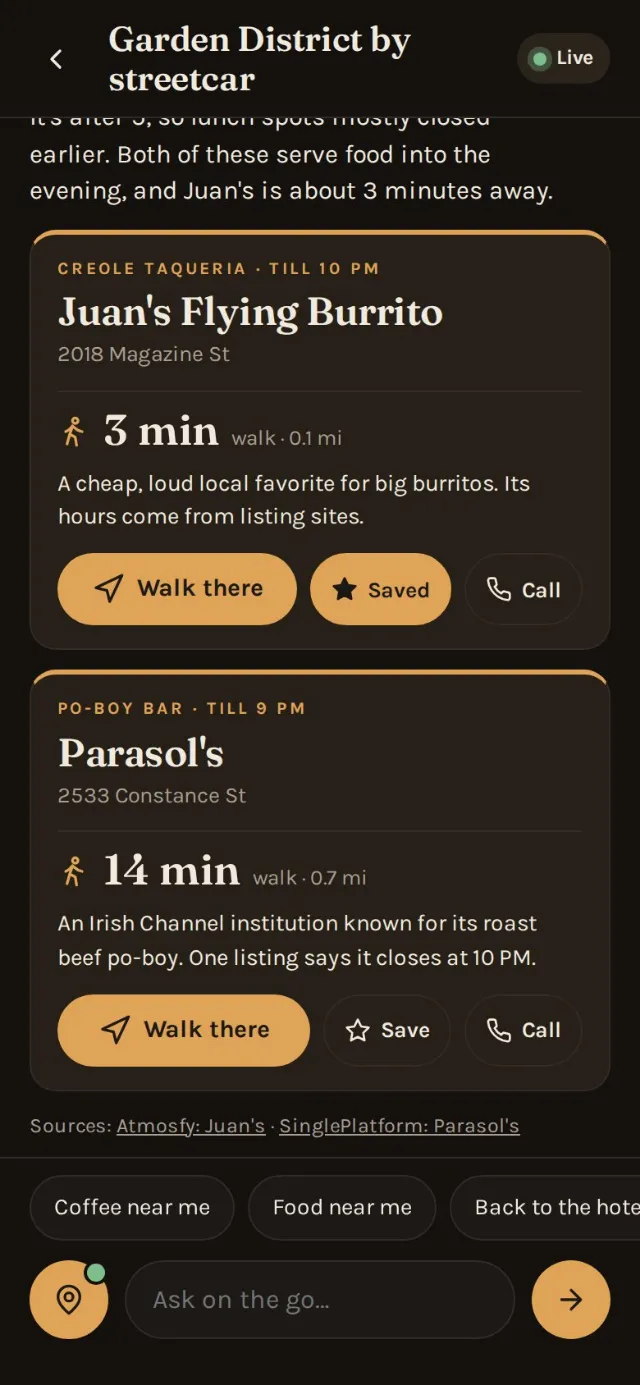
The name, the walk large, and the one line that matters. Walk there opens Google Maps in walking mode, from where you're standing. Nothing gets booked or bought: it finds the place and you tap.
The quick questions sit above the keyboard. Save puts a place on the day's list, the one you'll want at the end.
The plan, your tastes and the trip fold into one line at the top. Open it to check what the Go is working from, or to wrap up.
When the day is done, the Go folds into a summary: where you went, what you saved, how many questions you asked.
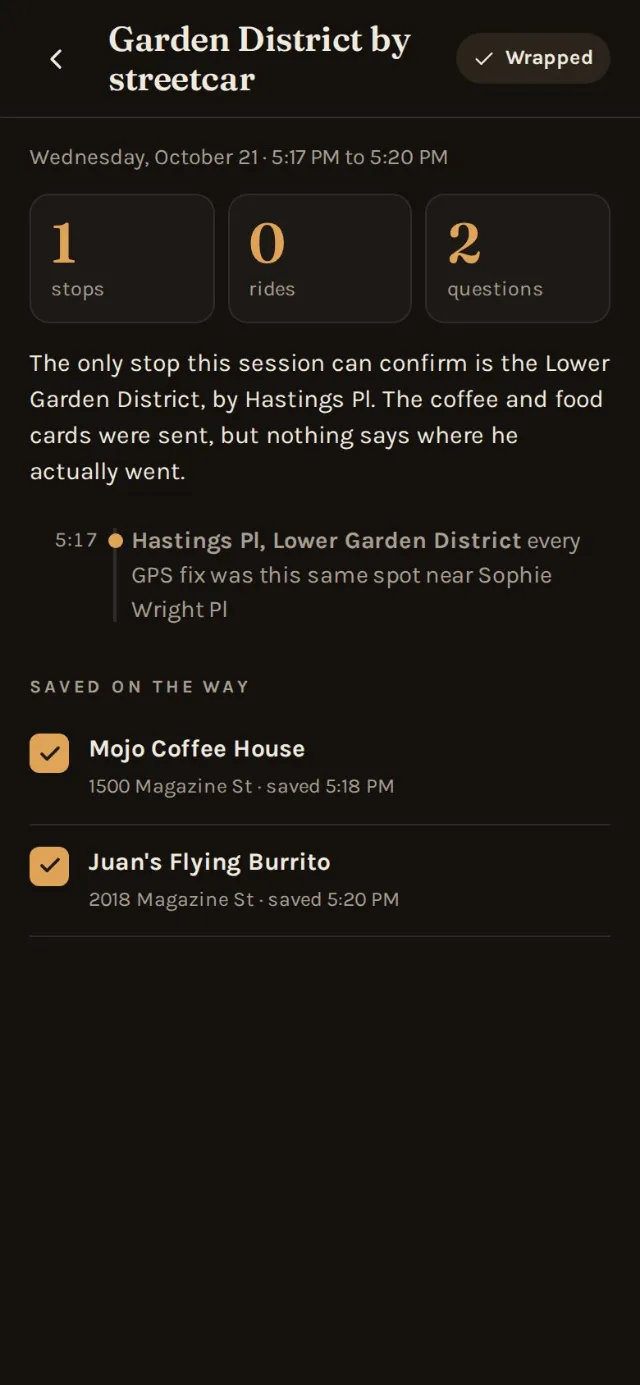
Warm amber on near-black for after dinner. Black on white with signal red, readable in full sun. Or both, switched by the clock.
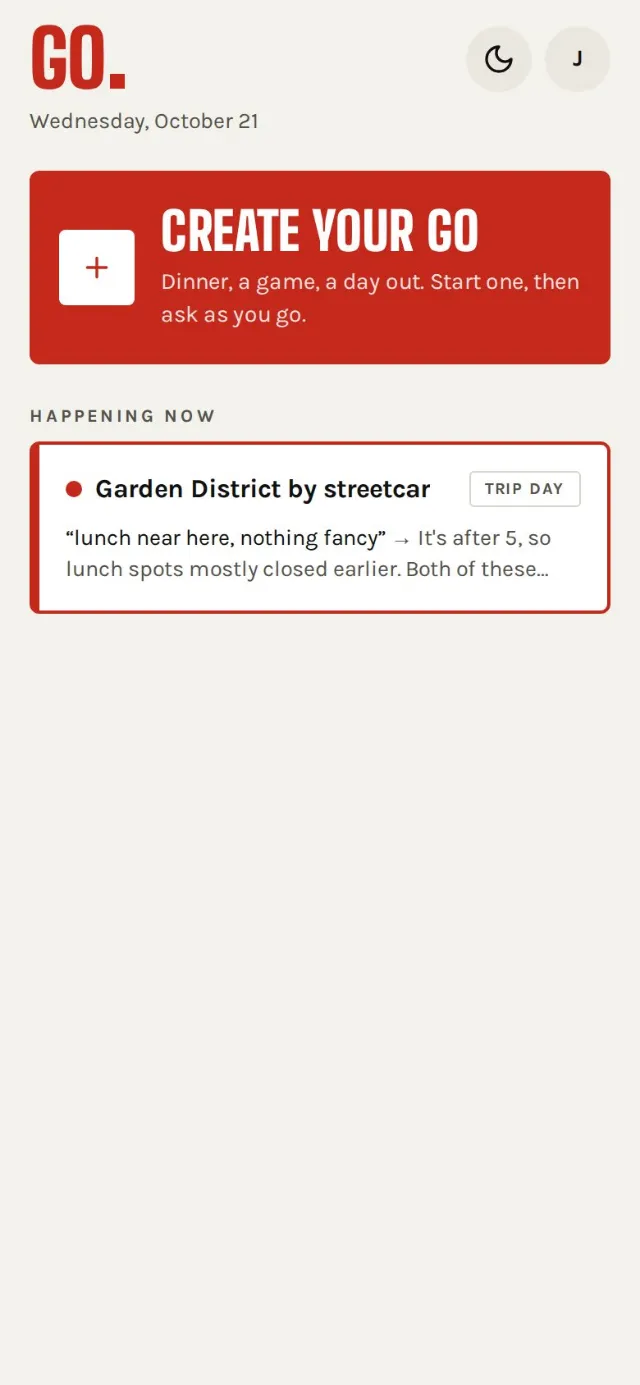
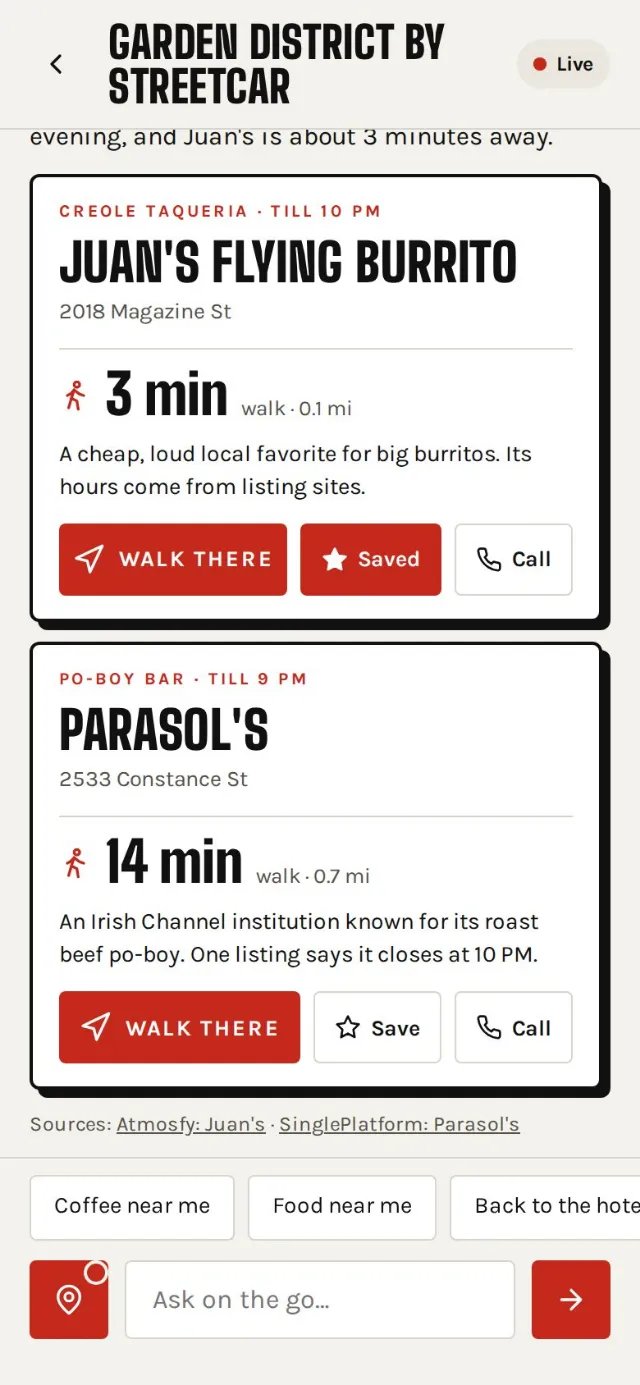
No reservations, orders or payments. It finds the option and the link, and you tap.
Nobody hears from your Go. It answers you and only you.
Your location goes to the Go you're in, nowhere else. One tap turns it off.
A side quest reads the trip and hands the day back. The trip's own session writes it down.
Each Go is its own Claude Code session, started with a brief written from the Go: the outing, your tastes, the trip it belongs to. It looks things up the way you would, and it answers with the same model you'd get at a terminal.
phone ── Go (behind your sign-in)
          └─ the session hub ── start · ask · read
                     └─ a Go session  CLAUDE.md: the outing, your tastes, how to answer
                          ├─ here.json     your phone's GPS while it's live
                          └─ parent/       the trip's own notes, read at the start
          wrap ── the day ──▶ the trip's session ──▶ the trip page
Dinner tonight, the game on Sunday, a day in a city you're still learning.